






01
AI Models
Select specialized forms of machine intelligence according to the problem.
An independent intelligence concept
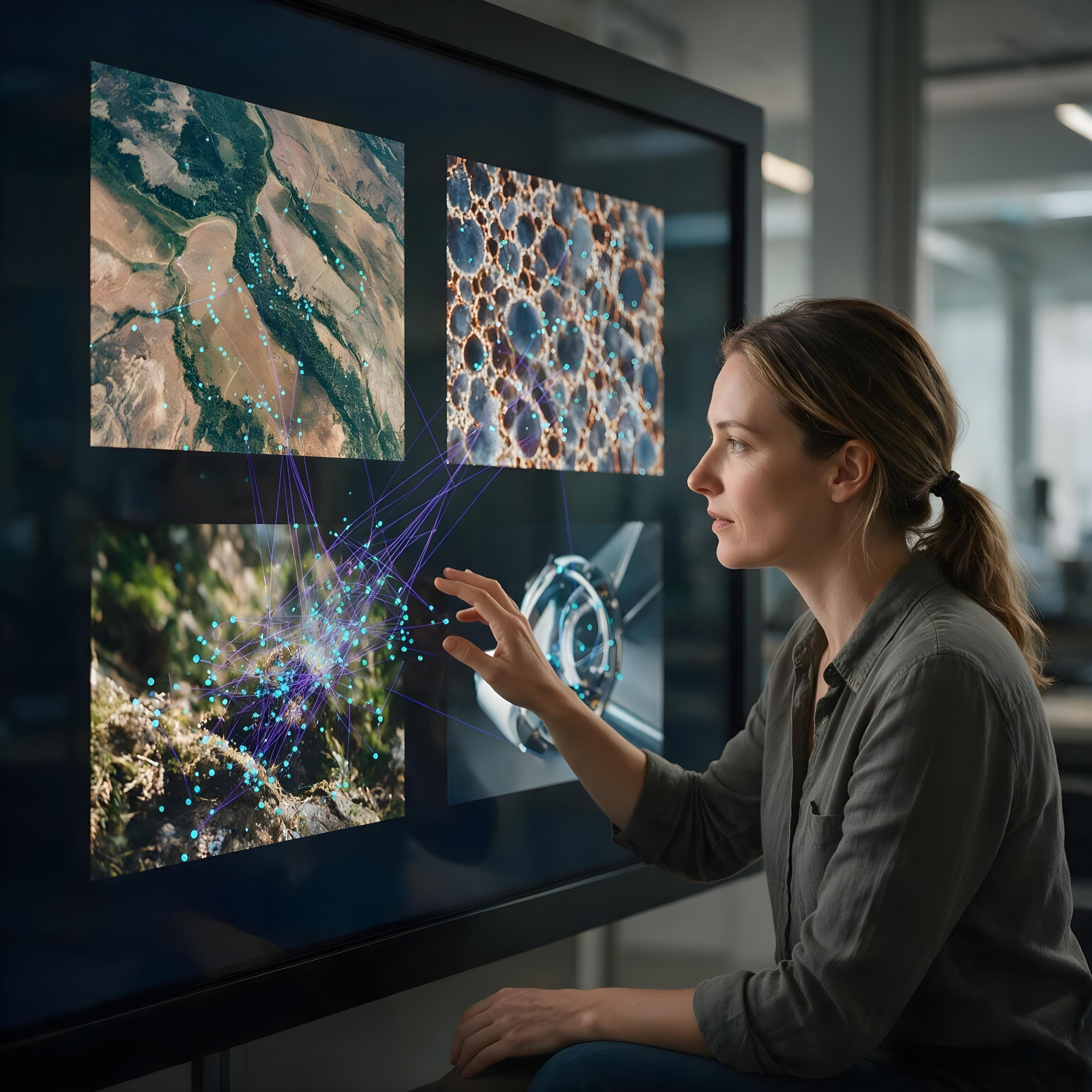
VioSense is envisioned as an adaptive intelligence infrastructure that can bring together specialized AI models, analytical tools, reliable evidence and human expertise to support the understanding of complex problems and important decisions.
Intelligence Beyond Limits

Why VioSense began
Different AI systems can write, research, analyze data, create software and interpret images. Each has its own strengths, limitations and sources of information. Yet these systems often operate separately, leaving people to determine which tool to use, which answer to trust and what evidence may still be missing.
VioSense began with the belief that the future of intelligence may depend not on one system doing everything, but on a structure capable of bringing different forms of intelligence together.
“What if the future of AI is not one system trying to do everything, but an intelligent structure capable of bringing different forms of intelligence together?”
A system of intelligence, not a single model
VioSense is conceived to understand a problem and determine which combination of AI models, analytical tools, reliable evidence and human expertise may be needed to address it. Its purpose is not to force every task through one model, but to organize specialized capabilities around a clear objective.
Select specialized forms of machine intelligence according to the problem.
Apply appropriate methods to research, examine and interpret information.
Connect conclusions to the strength, limits and conflicts within the available evidence.
Keep important judgment connected to legitimate human knowledge and authority.
Purposeful orchestration
Designed to work with specialized intelligence
Established systems such as ChatGPT, Gemini, Claude and other AI tools may instead become resources that VioSense could organize according to a particular purpose. The distinction is fundamental: VioSense is envisioned as the structure that determines how different forms of intelligence can work together, not as a claim that one model should replace them all.
Built to evolve
Technology changes quickly. VioSense is envisioned to recognize when a model, tool or method is becoming inadequate; explore alternatives; test possible replacements; and adopt a stronger solution through a controlled process. If a change fails, the system should be able to return to a previously trusted version.
A system may improve itself, but it must not remove the safeguards governing its evolution.
Connected when possible. Capable where necessary.
VioSense could use global intelligence resources when connected online while preserving essential capabilities in offline, private or highly secured settings. The objective is to support useful intelligence without treating every environment as if it has the same access, privacy or security requirements.
Broader global resources and specialized systems.
Restricted information and controlled access.
Essential capabilities where external connectivity is unavailable or inappropriate.
Stronger operational boundaries and governance.
A long-term vision
As the concept develops, VioSense could support fields in which complex evidence, specialized knowledge and accountable judgment must work together.
Support examination of complex knowledge, evidence and uncertainty.
Organize specialized intelligence for research, development and system planning.
Bring together analytical resources while making uncertainty and governance visible.
Help examine competing evidence, institutional needs and possible consequences.
Support complex decisions across interconnected organizational functions.
Assist structured analysis where authority, security and accountability are essential.
These are envisioned areas of potential application, not claims of currently deployed capabilities.
Inspired by structural functionalism
The philosophy of VioSense is influenced by the founder's background in Political Science and an understanding of structural functionalism. A society depends on different but interconnected institutions: government, law, education, science, the economy and civil society each perform distinct functions.
VioSense applies this perspective to intelligence. One structure may organize the process, another may verify evidence, another may conduct research, another may preserve knowledge, while another helps ensure that actions remain properly governed.
The goal is not uniformity. It is purposeful coordination among specialized functions.
The principles that must remain
Intelligence becomes more valuable when its functions are properly organized.
AI should never claim more than the available evidence can support.
The ability to perform an action does not automatically create the authority to perform it.
A system may improve itself, but it must not remove the safeguards governing its evolution.
Progress should not erase identity, history or accountability.
Intelligence must remain connected to human needs and legitimate human authority.
What evolution must protect
For VioSense, evolution should not mean forgetting what came before. Its long-term identity depends on preserving history, principles, trusted versions and accountability even as individual models, tools and methods change.
Independent by design
Viogram may use VioSense, but Viogram does not define or limit what VioSense could become. VioSense stands as an independent concept, created with a purpose that can extend beyond any single platform or application.
VioSense is an independent concept for an adaptive intelligence infrastructure designed to organize specialized AI models, analytical tools, reliable evidence and human expertise around complex problems and important decisions.
VioSense is not envisioned merely as a question-and-answer tool or as one AI model trying to perform every task. Its purpose is to bring together the most appropriate intelligence resources for a particular objective.
No. VioSense is not intended to compete directly with established AI systems. These and other specialized tools could instead become resources that VioSense organizes according to the problem being addressed.
The vision is for VioSense to identify what is known, expose conflicting evidence, recognize what remains uncertain and avoid claiming more than the available evidence can support.
VioSense is envisioned to identify inadequate components, test alternatives and adopt stronger solutions through a controlled process. Safeguards, version history and the ability to return to a previously trusted version are central to that vision.
The concept includes the ability to use global resources when online while preserving essential capabilities in offline, private or highly secured settings.
VioSense is an independent concept with its own purpose and future. Viogram may use it, but Viogram does not define or limit what VioSense could become.
VioSense must become more capable without becoming less controllable, more adaptable without losing its identity, and more intelligent without separating itself from evidence, accountability and human purpose.
